


As our loyal companions enter their golden years, their needs begin to shift. While a graying muzzle is a beautiful sign of a life well-lived, aging often brings challenges to a dog’s comfort, mobility, and overall vitality. Understanding these changes early allows you to provide the proactive support they need to stay happy and active. The goal is to do all we can to give them a quality life, especially in the senior years.
Aging is not a "one size fits all" process. Metabolic rates and skeletal stress vary significantly by breed size, meaning your dog's "golden years" may start much sooner or later than a neighbor's pet.
| Size Category | Typical Weight | Senior Milestone | Examples |
|---|---|---|---|
| Small | Under 20 lbs | 10–12 Years | Yorkie, Chihuahua, Toy Poodle |
| Medium | 21–50 lbs | 8–10 Years | Beagle, Cocker Spaniel, Heeler |
| Large | 51–90 lbs | 7–9 Years | Labrador, Golden Retriever, GSD |
| Giant | Over 90 lbs | 5–7 Years | Great Dane, Mastiff, Saint Bernard |
Regardless of breed size, senior dogs require a targeted approach to wellness. As cellular repair slows down, the focus shifts from growth and development to maintenance and protection of vital systems.
Organ Function Routine blood work becomes essential to monitor kidney and liver values. Early detection of declining organ function allows for dietary adjustments that can significantly extend life expectancy and improve day-to-day comfort.
Cognitive Support Much like humans, dogs can experience age-related cognitive decline. Keeping them mentally engaged with "sniff-work" and providing antioxidants helps maintain neural pathways and reduces evening anxiety, restless pacing, or confusion.
Immune Vitality A senior's immune system is less resilient to environmental stressors and pathogens. Consistent parasite prevention and high-quality, biologically appropriate nutrition are the first line of defense against systemic inflammation and chronic infection.
Sensory Awareness Vision and hearing often dim as dogs age due to cataracts or neural changes. Adapting your communication to include hand signals and maintaining a consistent furniture layout helps them navigate their world with confidence despite sensory changes.
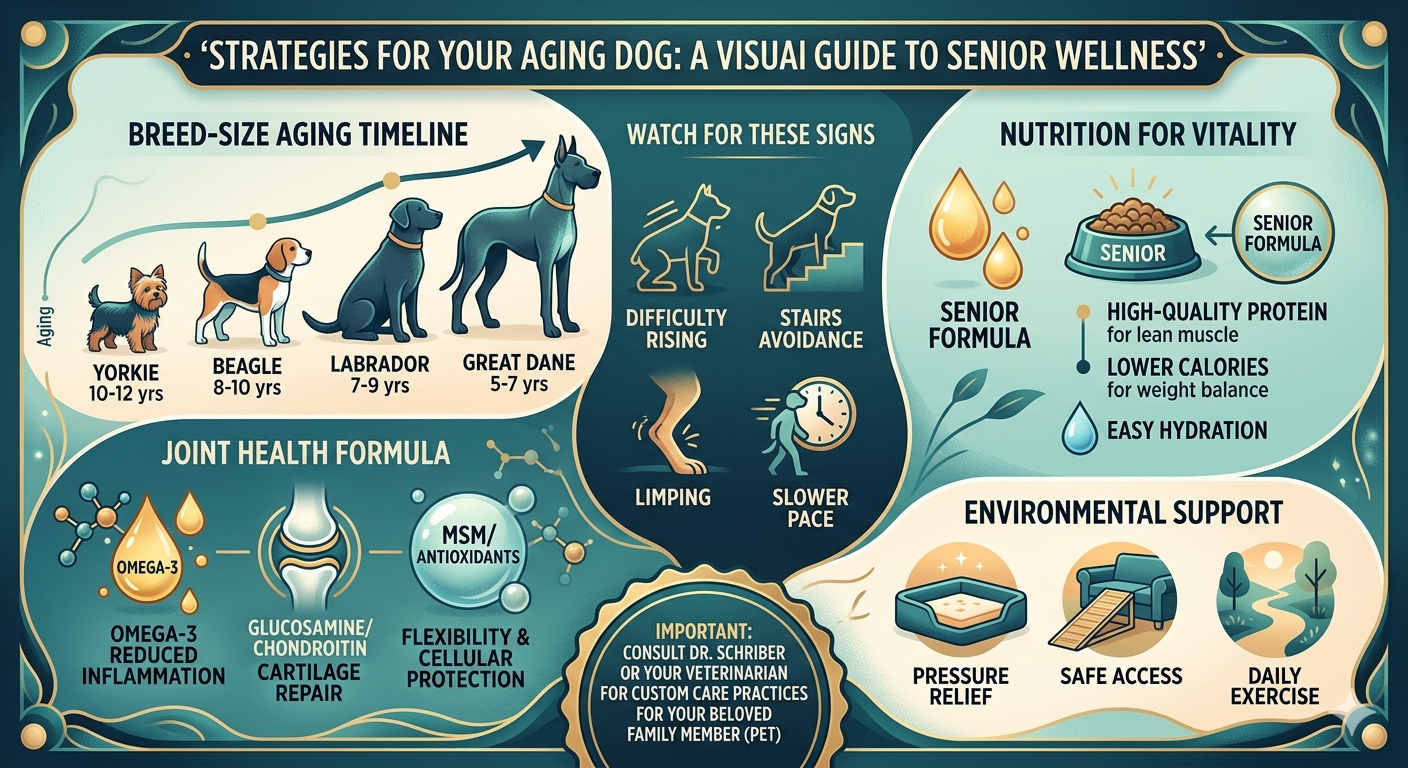
As dogs age, the natural production of joint-lubricating compounds slows down, leading to bone-on-bone friction and inflammation. Proactive "chondroprotective" therapy can significantly extend a senior dog's comfortable walking years.
A senior dog's metabolism undergoes significant changes, requiring a shift from high-calorie growth formulas to nutrient-dense, easily digestible diets that prioritize organ protection.
Small modifications to your dog’s home environment can remove daily "micro-stresses" on their body, restoring their confidence and independence as their mobility changes.
Every dog is a unique family member. It is imperative that you consult Dr. Schreiber to develop custom care practices specifically tailored for your beloved pet.
Contact Our TeamGenerally, dogs are considered seniors when they reach the last 25% of their expected lifespan. This varies significantly by breed size:
Because aging happens faster in larger dogs, we recommend transitioning to senior-specific wellness checks earlier for our bigger patients.
Arthritis can be subtle in the beginning. Look for these "red flag" behaviors:
Most nutraceuticals like Glucosamine and Chondroitin are very safe, but they can occasionally interact with specific prescriptions. For example, high doses of Omega-3s can affect blood clotting, which is a concern if your dog is on certain anti-inflammatory medications or scheduled for surgery.
Important: Always provide your veterinarian with a full list of supplements before starting a new medical treatment plan.
Not necessarily. Diet changes should be based on your dog's Body Condition Score (BCS) and overall health rather than just the calendar. If your dog is maintaining a healthy weight and has good muscle tone, their current food may be fine. However, if they are gaining weight or showing signs of kidney issues, a senior formula with lower calories and controlled phosphorus is beneficial.
We recommend at least every 6 months for wellness exams for senior pets. Because dogs age faster than humans, a lot can change in six months. Regular exams allow us to catch heart murmurs, dental disease, or internal issues through bloodwork before they become advanced emergencies. Check with your veterinarian to determien if your beloved pet needs health checks more often.