

Dental health is a critical yet often overlooked aspect of your dog’s overall well-being. Periodontal disease, the most common dental issue in dogs, affects up to 80-90% of dogs over the age of three, leading to pain, tooth loss, and even systemic health problems like heart and kidney disease (Cornell University College of Veterinary Medicine, n.d.). Interestingly, smaller breeds like Toy Poodles and King Charles Spaniels are at higher risk, with some facing nearly four times the odds compared to crossbred dogs (Royal Veterinary College, 2021). A startling statistic: By age two, 80% of dogs already show signs of dental disease, which has risen over 12% since 2006 (AKC Canine Health Foundation, 2012). 47.7% of owners report halitosis, and early intervention prevents progression (PMC, 2020).
In this article, we explore dental care for dogs, including brushing techniques, signs of gum disease, and veterinary-recommended practices to promote better pet oral health. By prioritizing dental hygiene, you can extend your dog’s lifespan and improve their quality of life.
Imagine Max, a 5-year-old Labrador Retriever from a busy family home. His owners noticed his persistent bad breath and reluctance to chew toys, dismissing it as “doggy odor.”
During a routine vet visit, the exam revealed inflamed gums and tartar buildup, early periodontal disease. The vet warned that untreated, it could lead to tooth loss and infections spreading to his organs.

Committed to change, Max’s family started daily brushing with enzymatic toothpaste, added VOHC-approved dental chews, and scheduled professional cleanings. Within months, Max’s breath freshened, he eagerly played fetch again, and his energy soared. This tale, inspired by common veterinary cases, shows how proactive dental care can turn potential pain into playful vitality.
Dental issues in dogs primarily stem from plaque buildup, a sticky film of bacteria that forms on teeth shortly after eating. If not removed, it hardens into tartar, irritating gums and leading to periodontal disease (American Veterinary Medical Association, n.d.). A fascinating fact: Dental disease is the top diagnosed problem in dogs under 10 years old, yet less than half receive treatment due to hidden symptoms (Hopkinton Animal Hospital, n.d.). Brachycephalic breeds like Bulldogs face higher risks due to crowded teeth, while overall prevalence reaches 73% in dogs seen at veterinary practices (Banfield Pet Hospital, 2024). Poor oral health isn’t just local; it’s linked to organ changes in the heart, liver, and kidneys (Harmony Animal Hospital, n.d.).
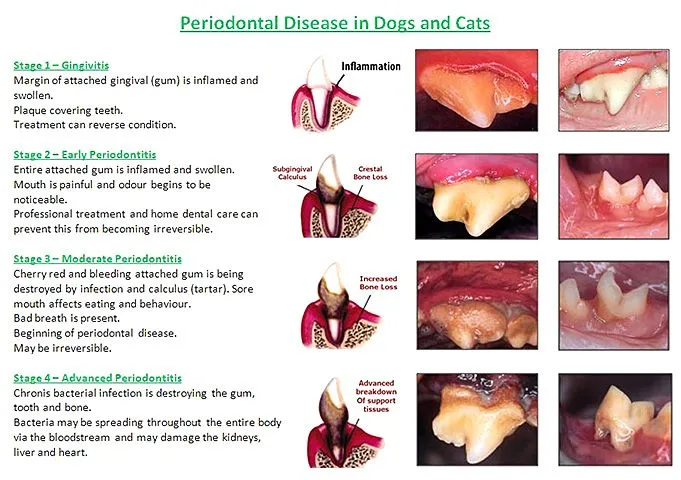
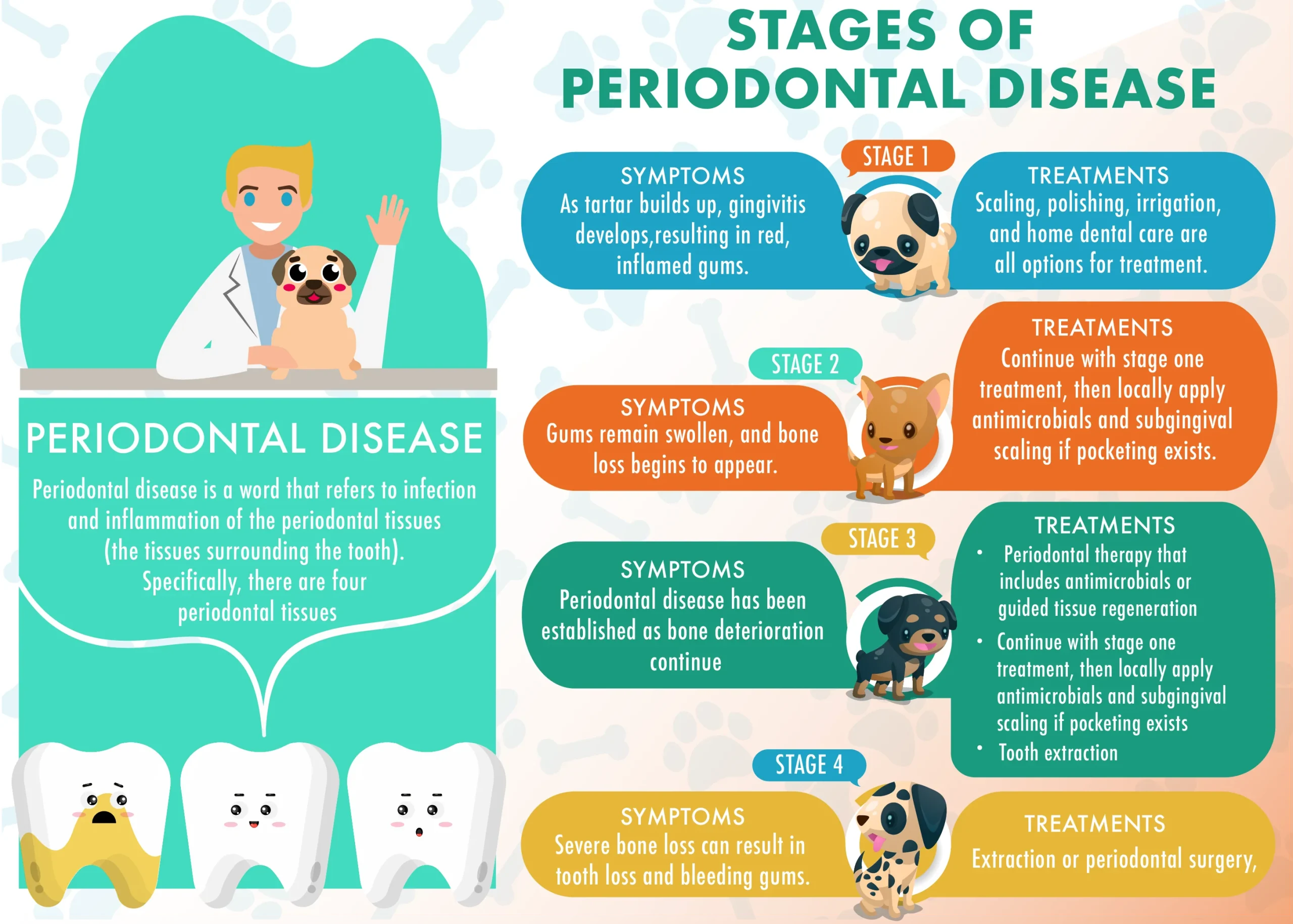
Periodontal disease is a common progressive condition in dogs, starting with plaque buildup and advancing to severe gum inflammation, bone loss, and tooth issues. The chart below outlines the four stages, with symptoms, treatments, and visual examples for early detection and care.
Regular home dental checks complement annual vet exams. Lift lips to check for plaque, tartar, or gum redness. Feel for loose teeth and note breath odor. Conduct monthly evaluations; see a vet immediately if issues appear.
Click to enlarge
Causes include poor diet, lack of chewing, and infrequent brushing, allowing bacteria to thrive. Gum disease progresses in stages: Gingivitis (reversible inflammation) to advanced periodontitis (irreversible bone loss). One in eight dogs suffers dental disease annually, with 18 breeds at elevated risk (Royal Veterinary College, 2021). Untreated infections can cause chronic pain, abscesses, and systemic illnesses. Retained baby teeth or extra teeth are common in small breeds, requiring early detection (Merck Veterinary Manual, n.d.). Dogs with periodontal disease are more prone to heart valve issues (Zoetis Petcare, n.d.). Early prevention is vital, as owners often miss signs until advanced stages.
Click to enlarge
Recognizing gum disease early can prevent escalation.
Common symptoms include bad breath (halitosis), discolored teeth (brown or yellow from tartar), inflamed or bleeding gums, loose or missing teeth, excessive drooling, facial swelling, irritability, weight loss, and favoring one side while chewing
Other indicators include sneezing, nasal discharge, teeth chattering, or abnormal chewing. If your dog shows “ropey” saliva or drops food, seek vet care immediately, for dogs generally hide pain until severe.
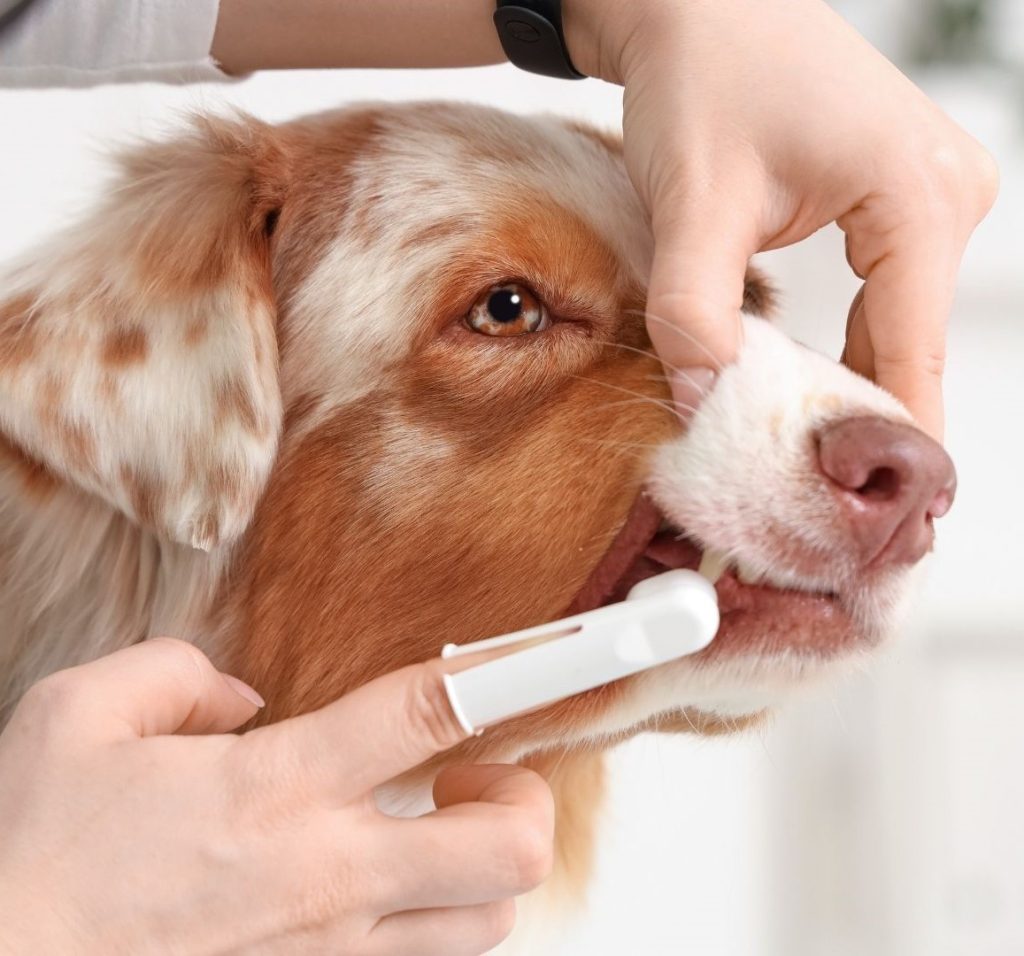
Brushing is the gold standard for dental care, ideally daily or at least three times weekly (VCA Animal Hospitals, n.d.; Colorado State University Veterinary Teaching Hospital, 2023). Use a soft-bristled toothbrush or finger brush. Consistent brushing reduces plaque by disrupting bacterial films. Reward with praise to make it positive.
IMPORTANT: Use pet-specific enzymatic toothpaste, never human varieties, which contain harmful fluoride.
Track improvements in breath and gum color monthly. Annual professional cleanings under anesthesia remove deep tartar (American Veterinary Dental College, n.d.). If disease advances, treatments like extractions or root canals may be needed (Veterinary Partner, 2025). Ask your veterinarian if you have questions.
Beyond brushing, incorporate VOHC-sealed products for plaque and tartar control (Veterinary Oral Health Council, n.d.). Water additives and sprays with chlorhexidine aid bacteria reduction (Cornell University College of Veterinary Medicine, n.d.). Dry kibble over wet food helps scrape teeth (Virginia Tech Veterinary Teaching Hospital, 2023). Daily chews can maintain oral health when combined with brushing. check with your veterinarian for specific suggestions for your dog.
Maintaining your dog’s dental health through brushing, chews, and vet check-ups prevents painful diseases and enhances their life. Start small, stay consistent, and consult professionals for tailored advice. Contact Schreiber Veterinary Hospital today for professional dental exams, cleanings, and tailored prevention plans to safeguard your dog’s oral health. Contact us today!
Achieving a healthy weight is easier with the right nutrition. Support your dog’s weight loss journey with vet-prescribed therapeutic diets delivered to your home via the Schreiber Veterinary Hospital Online Pharmacy.
Dental care prevents periodontal disease, which affects 80-90% of dogs over age 3 and 80% by age 2. Maintaining oral health allows your pet to avoid pain, tooth loss, and bad breath.
Most importantly, proper care prevents systemic issues like heart, liver, and kidney disease caused by bacteria entering the bloodstream through diseased gums.
Common clinical signs of gum disease include:
Remember that dogs are experts at hiding pain, so it is vital to act quickly if you notice any of these symptoms.
Brushing every day is the ideal goal. At a minimum, you should aim to brush your dog's teeth 3 times per week to effectively reduce plaque buildup before it hardens into tartar.
Use a soft pet toothbrush or finger brush with enzymatic dog toothpaste. You should introduce this gradually over 1-2 weeks with finger rubs and plenty of praise.
You should only use pet-specific enzymatic toothpaste. Never use human toothpaste, as it contains fluoride and other ingredients like Xylitol that are toxic to dogs.
When combined with regular brushing, these products can help reduce plaque and tartar:
Most dogs require professional cleaning annually, or sooner if clinical signs of disease appear. These procedures are performed under anesthesia to safely remove deep tartar below the gum line and may include extractions if the disease is advanced.
While all dogs need care, certain groups are at higher risk:
Untreated disease leads to chronic pain, painful abscesses, and permanent tooth or bone loss. Furthermore, bacteria can spread from the mouth to cause heart valve issues, as well as significant kidney and liver damage.
Monthly Inspection → Lift your dog's lips to inspect for plaque/tartar buildup, gum redness or swelling, loose teeth, and bad breath. You should seek veterinary care immediately if any of these issues are found.