


Obesity in cats is one of the most common health issues facing pet owners today. According to veterinary experts, up to 61% of cats in the United States are overweight or obese, leading to serious complications if left unaddressed. At Schreiber Veterinary Hospital, we specialize in feline wellness and want to help you keep your cat thriving.
In this article, we will cover how to identify obese cats using proven body condition score charts, explain why maintaining a healthy weight for cats is critical, and share safe, vet-approved strategies to help cats lose weight. Remember, seek veterinarian expertise before starting any weight management plan for your cat.
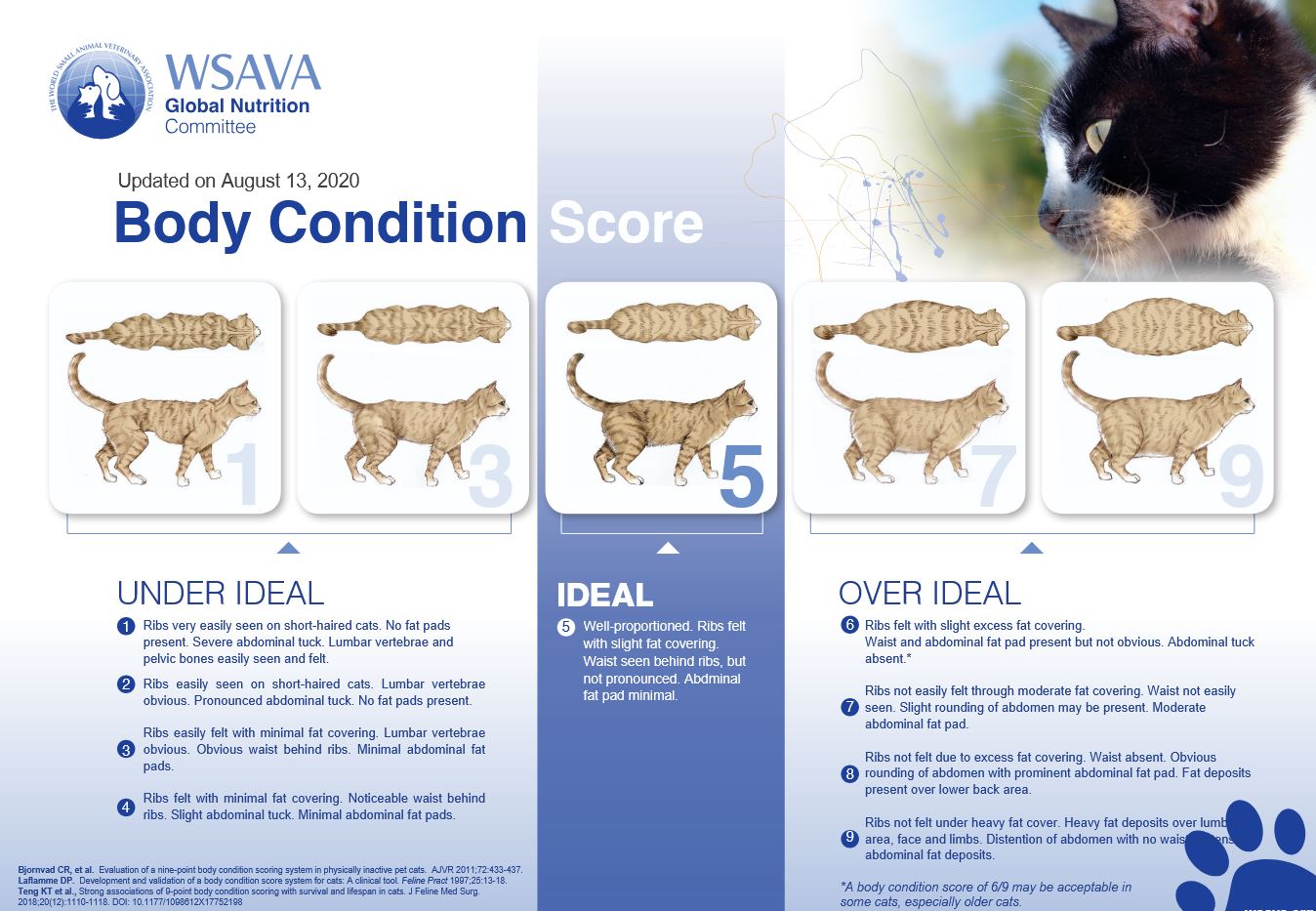
Obesity occurs when a cat carries excess body fat that impacts their health. A cat is typically considered overweight at 10–20% above ideal body weight and obese when exceeding 20%. However, absolute pounds alone don’t tell the full story—breed, age, sex, and frame size vary widely. That’s why veterinarians rely on the Body Condition Score (BCS), a standardized 1–9 scale endorsed by the Association for Pet Obesity Prevention (APOP), Purina, and the World Small Animal Veterinary Association (WSAVA).
Healthy weight for cats usually falls around 8–12 pounds for most domestic shorthairs (with many ideal around 10 pounds), but the BCS is far more accurate than a bathroom scale.
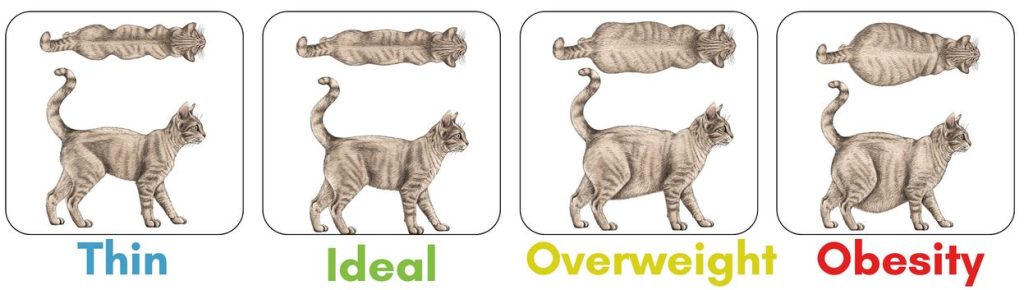
The easiest way to check if your cat is at a healthy weight is with a quick visual and hands-on assessment using a cat body condition score chart. Here’s how the BCS breaks down (focus on ideal vs. overweight/obese):
BCS 4–5 (Ideal / Healthy Weight). Ribs are easily felt with a slight fat cover (not visible). Visible waist behind the ribs from above. Slight abdominal tuck from the side. Your cat looks well-proportioned and athletic.
BCS 6–7 (Overweight). Ribs are harder to feel under a layer of fat. Waist is less defined or absent. Abdomen is rounded with minimal tuck. Fat deposits may start appearing around the spine or base of tail.
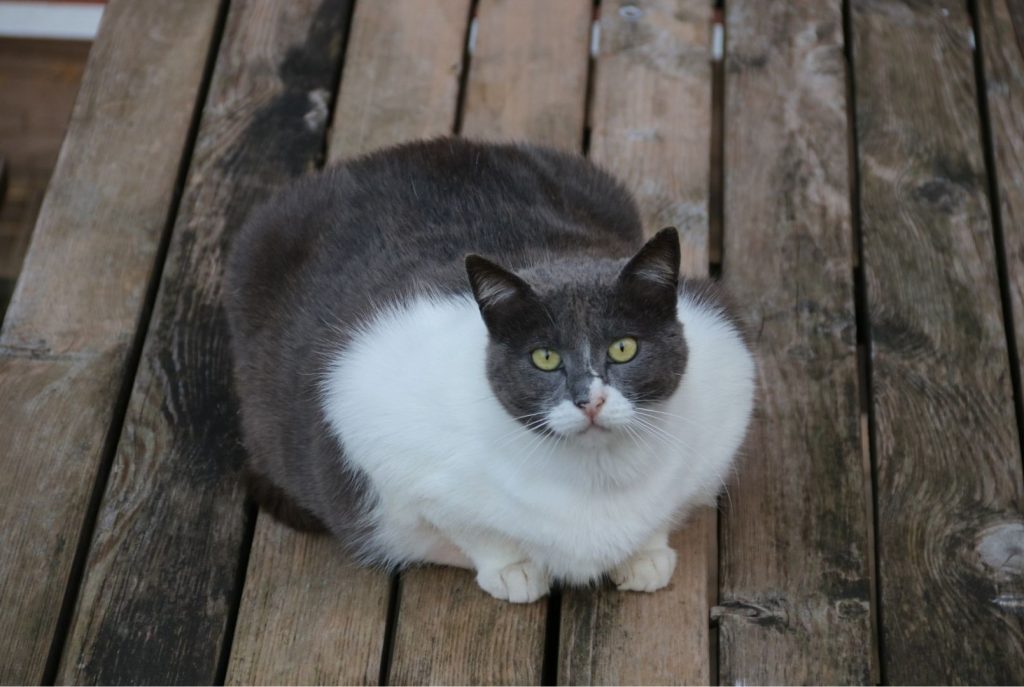
BCS 8–9 (Obese). Ribs and spine are very difficult or impossible to feel. No waist—body looks barrel-shaped from above. Pronounced sagging belly (fat pad) that may sway when walking. Heavy fat deposits on neck, chest, and lower back.
Stand above your cat and look for an hourglass waist. Run your hands along the ribs—they should feel like the back of your knuckles (not hidden under thick padding). These visual resources (available on sites like Pet Obesity Prevention and Purina Institute) make it simple to compare your cat at home.
Make an appointment with Schreiber Veterinary Hospital, we can perform a full BCS assessment during your cat’s next visit and calculate their exact target weight.
Carrying extra weight can make cats prone to serious health threats, including:
Maintaining a healthy weight for cats prevents these problems, improves mobility, strengthens the immune system, and helps your feline companion enjoy a longer, happier life with you. See Dr. Schreiber, veterinarian at Schreiber Veterinary Hospital for details on how obesity may be affecting your specific cat. For more information, check out the WSAVA Global Nutrition Guidelines (PDF)
The good news? With the right plan, most cats can reach their ideal weight safely. Never put your cat on a crash diet—rapid weight loss can trigger fatal hepatic lipidosis. All weight-loss programs must be vet-supervised. Here are four cat weight loss strategies used successfully.
At Schreiber Veterinary Hospital, our team can create personalized weight-loss plans including food recommendations and follow-up monitoring tailored to your cat’s breed, age, and lifestyle.




Dr. Schreiber and our compassionate team will assess your cat’s body condition score, discuss healthy weight for cats targets, and build a customized plan to manage or prevent feline obesity.
Contact us now for your cat’s personalized obesity evaluation and weight management consultation. See Your feline friend deserves to feel their best!
Don’t wait until obesity causes pain or illness. Early identification and management of obesity in cats can add years to your pet’s life. Schedule a wellness exam at Schreiber Veterinary Hospital today!
Achieving a healthy weight is easier with the right nutrition. Support your cat's weight loss journey with vet-prescribed therapeutic diets delivered to your home via the Schreiber Veterinary Hospital Online Pharmacy.
Obesity occurs when a cat carries excess body fat that harms health. It is professionally categorized based on weight percentage:
This is assessed by the Body Condition Score (BCS 1–9 scale), not scale weight alone. The ideal weight for most domestic shorthairs is 8–12 lbs (often around 10 lbs), but this varies by breed, age, sex, and frame.
Visual and physical signs include ribs that are hard to feel under a fat layer, no visible waist from above, and a rounded abdomen with minimal or no tuck. You may notice a barrel-shaped body, a sagging belly fat pad that sways when walking, and heavy fat deposits on the neck, chest, spine, and base of the tail.
The BCS Scale Guidelines:
Several factors contribute to weight gain in felines:
Obesity significantly increases the risk of Type 2 diabetes (3–5x higher risk), arthritis, joint pain, and lameness. It is also linked to heart disease, hypertension, urinary tract issues, and bladder stones.
One of the most dangerous risks is hepatic lipidosis, a fatal fatty liver disease that can occur if an obese cat stops eating. Overall, obesity leads to a reduced lifespan (2–3 years shorter), a lower quality of life due to less energy, grooming difficulty, and breathing issues, and a weakened immune system.
A veterinarian uses a BCS assessment involving a visual check (looking for an hourglass waist from above) and a hands-on check (feeling ribs like knuckles). Scale weight alone is not enough for a diagnosis. We recommend scheduling a wellness exam for an exact target weight calculation.
Weight loss must be Vet-supervised only. Owners should switch to a prescription low-calorie, high-protein, high-fiber diet (Hill’s, Royal Canin, or Purina formulas). It is vital to measure portions with a kitchen scale and eliminate free-feeding or scraps. Treats must be less than 10% of daily calories.
Action Steps:
Weigh every 1–2 weeks and aim for 0.5–2% body weight loss per week (roughly 0.5–1 lb per month). The goal is a steady transformation over 6–12 months. Never crash diet a cat as this risks hepatic lipidosis.
Prevention is easier than treatment. Maintain your cat's health by:
Up to 61% of U.S. cats are overweight or obese. That's like 6 out of every 10 cats you meet carrying extra weight—similar to if nearly two-thirds of adult humans were overweight or obese.
Imagine walking into a room of 10 cats: only 4 would be at a healthy, athletic build; the rest would have hidden ribs, no waist, and swinging belly fat. This "fat cat epidemic" shortens lives by 2+ years and spikes diabetes risk 3-5x, just like in people.