

Before You Squash That Spider…
The curious, harmless little hunter that's watching you right back.
Next time a small, fuzzy spider hops across your windowsill, pause before you reach for a shoe.
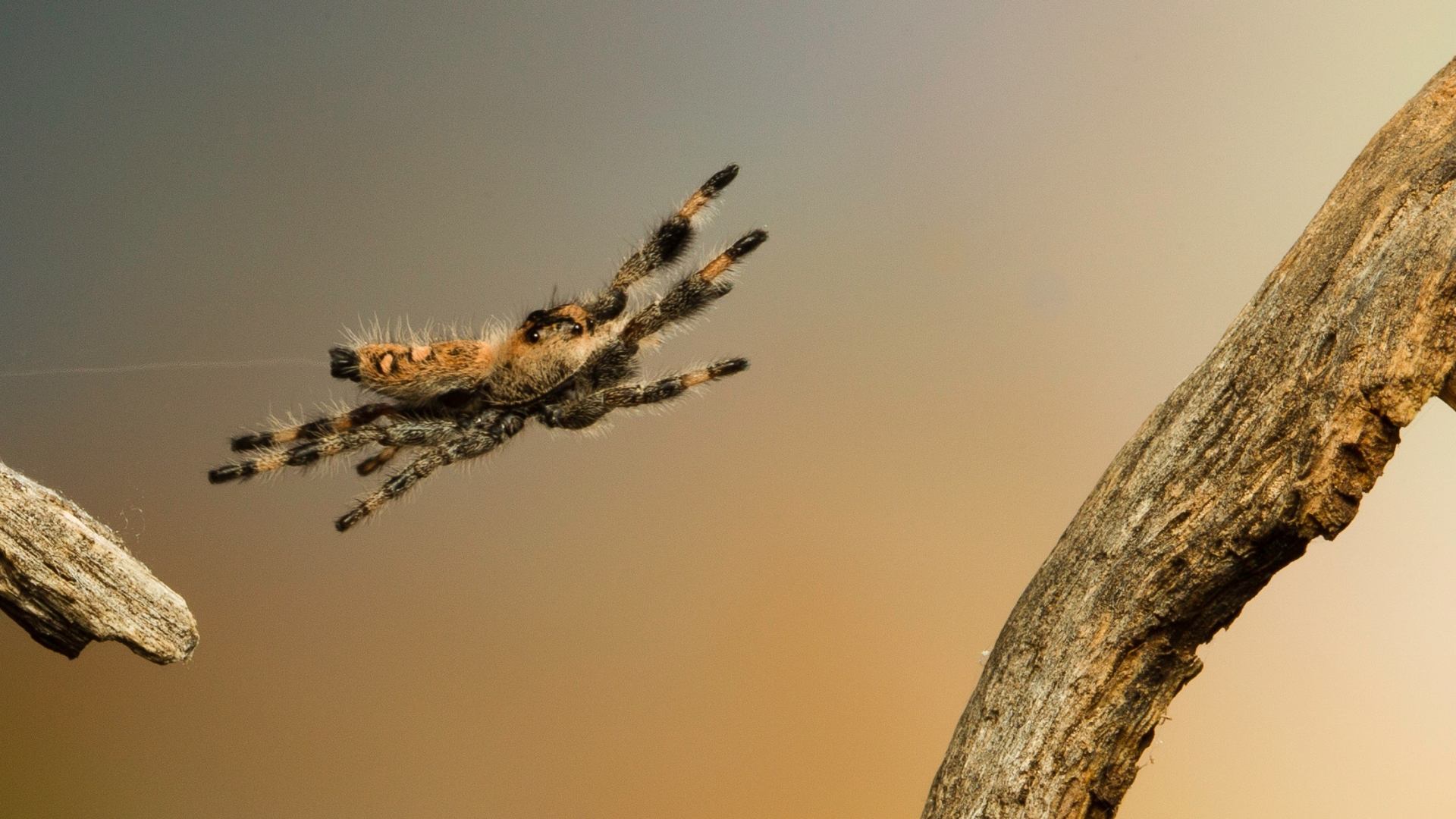
Look closer. Two big, shining eyes are looking right back at you. That tiny spider is watching you, working out what you are, and deciding what to do next. It might even tilt its head.
That's a jumping spider, and it means you no harm. Jumping spiders don't fill your corners with webs or chase people. They spend their short lives stalking flies, moths, and other small insects, often right around your home.
Dr. Schreiber recently saw two jumping spiders here at the hospital. It was a sweet reminder that even the smallest creatures can be someone's beloved companion, and that every one of them has a part to play.
Try the cup-and-paper trick. Slide a cup over your visitor, slip a piece of paper underneath, and carry it outside to a shrub or garden. It's a small act of kindness toward one of nature's most curious little hunters.
Jumping spiders went from niche hobby to mainstream pet in just a few years. Fans call them "spoods," and videos of their head tilts and big, shiny eyes have racked up millions of views under tags like #jumpingspider and #spidertok. Many new owners say they used to be afraid of spiders.
The trade-offsThey eat live insects, and they live only a year or two.
Jumping spiders don't come in "breeds" the way dogs do. Scientists recognize nearly 7,000 species in the jumping spider family, Salticidae (World Spider Catalog, 2026). Only a handful are kept as pets, and a few others are ones you're likely to spot around your home (HabitatCraft, n.d.).
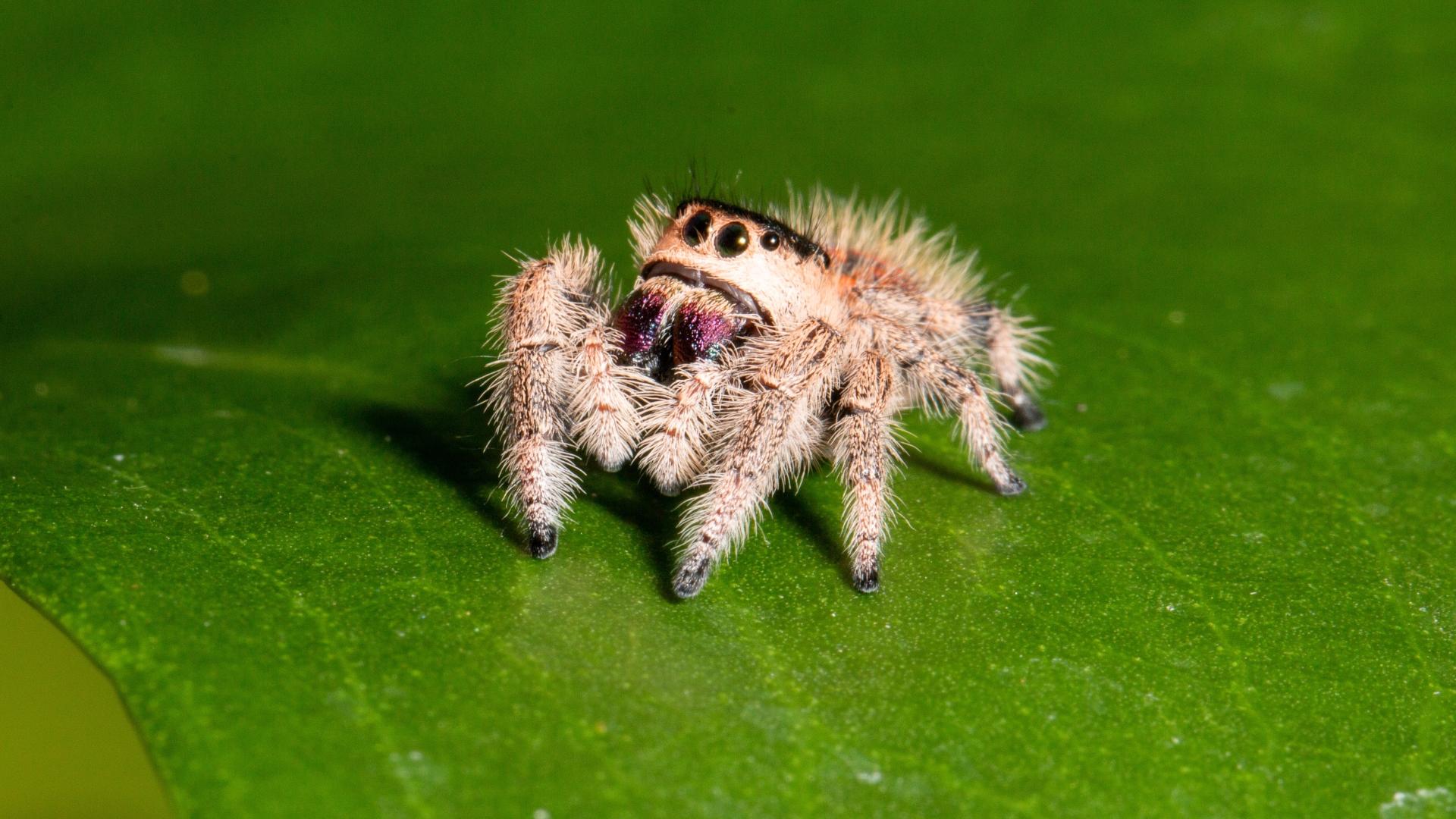
Southeastern U.S. and the Caribbean. The largest common species and the top beginner pick. Females come in orange, gray, or white; males are black and white.
Found across most of North America. Black with white spots and shiny green-blue fangs. A backyard regular and an easy pet.
Southeastern U.S. A tree-dweller whose juveniles can be strikingly colorful.
Eastern and central U.S. A smaller, less common Phidippus some hobbyists keep.
Western North America. Known for its bright red abdomen.
Eastern North America. Flat and mottled brown, often seen on tree bark, fences, and walls.
North America and Europe. Tiny (5–7 mm), striped, and common on buildings. Rarely captive-bred.
Southeast Asia. Among the largest jumping spiders. Need more humidity.
Africa, Asia, and Australia. Famous for problem-solving. For advanced keepers only.
Australia. Just 2–5 mm, with dazzling courtship dances. Not available as pets.
Thinking about a pet jumping spider? Choose a captive-bred animal. They tend to be healthier, and it protects wild populations.
For an animal with a brain about the size of a poppy seed, surprisingly smart.
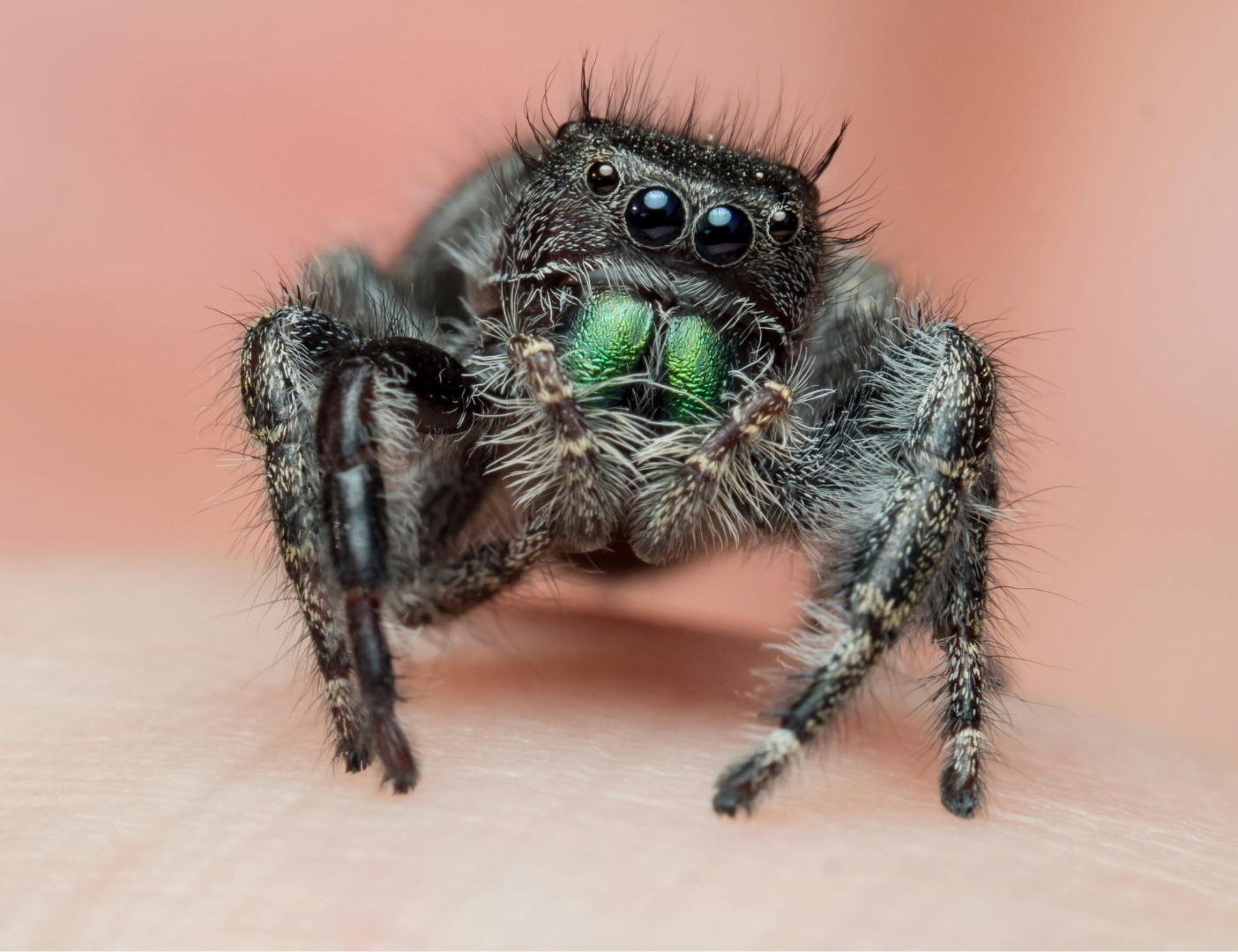
They aren't affectionate like a dog or cat. But their curiosity and visual attention make them unusually engaging for an invertebrate.
Jumping spiders "talk" almost entirely through posture and movement (Exo Pet Guides, 2026). This guide shows the five postures you're most likely to see, from calm to "back off."
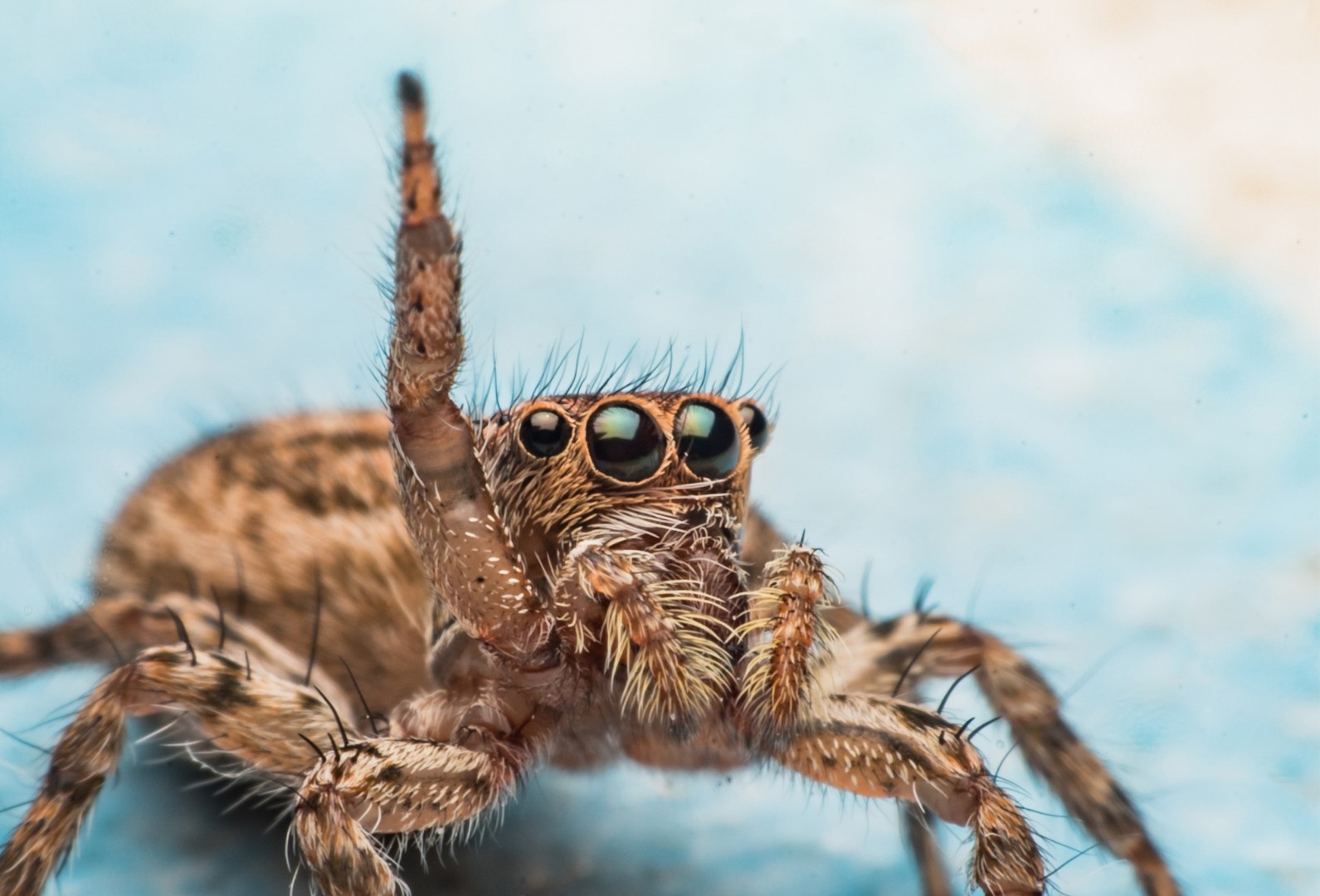
Males dance to win over a female with rhythmic leg waving, a zigzag approach, and abdomen drumming that sends vibrations through the surface. Some males even dance at their own reflection. It's harmless, but covering the glass gives him a rest. Courtship waving is rhythmic and repeated; a threat display is stiff and still.
Jumping spiders need live insects. They hunt by sight and usually ignore anything that isn't moving.
| Life stage | Good prey | How often |
|---|---|---|
| Spiderlings | Flightless fruit flies | Every 1–2 days |
| Juveniles | Larger fruit flies, small flies, pinhead crickets | Every 2–4 days |
| Adults | Blue or green bottle flies, house flies, small crickets or roach nymphs | Every 3–7 days |
WaterLightly mist one wall of the enclosure every day or two so your spider can drink the droplets. Don't spray the spider directly, and skip the water dish.
Molting is the riskiest time in a jumping spider's life. Young spiders shed their whole exoskeleton several times to grow; adults no longer molt. Watch for refusing food, a thick sealed silk hammock, and less activity.
The shed skin looks like a pale, see-through ghost of your spider. That's normal. Most pet jumping spiders live 1 to 2 years, sometimes up to 3, and females usually outlive males.
Before you travelIf your spider is in premolt or molting, call us first. Moving a molting spider can do more harm than good.
Call us if you notice a shrunken abdomen, curled legs, trouble walking, a stuck molt, an injury after a fall, or tiny moving specks that could be mites. A short video of the behavior helps us a lot.
Call (251) 203-1311 Contact UsNo. Jumping spiders are harmless to people. They don't chase humans, and their venom is meant for small insects. Most bites happen only when a spider is squeezed or trapped, and they are usually mild, like a pinprick.
Gently relocate it instead of squashing it. Place a cup over the spider, slide a piece of paper underneath, and release it outside on a shrub or in a garden, where it will keep eating flies and other small insects.
Scientists recognize nearly 7,000 species in the jumping spider family, Salticidae. Only a few, such as the regal jumping spider and the bold jumping spider, are commonly kept as pets.
Yes. Regal jumping spiders (Phidippus regius) and bold jumping spiders (Phidippus audax) are popular, beginner-friendly pets. Choose a captive-bred spider, provide a tall, ventilated enclosure, and plan to feed live insects.
Jumping spiders eat live insects. Spiderlings eat flightless fruit flies, and adults eat bottle flies, house flies, small crickets, or roach nymphs. Offer prey no bigger than the spider's body, and mist the enclosure walls so it can drink.
Most pet jumping spiders live 1 to 2 years, and some live up to 3. Females usually live longer than males.
It depends on the posture. Both front legs reaching up toward your hand usually means it is exploring or wants to climb. Front legs raised high and spread wide while facing you is a warning to back off. Rhythmic waving is usually a male's courtship dance.
Very smart for their size. Their brains are about the size of a poppy seed, yet some species plan detour routes to reach prey, and regal jumping spiders can recognize individual spiders they have met before.
Yes. Dr. Schreiber recently saw two jumping spiders at Schreiber Veterinary Hospital in Foley, Alabama. Call (251) 203-1311 if your spider has a shrunken abdomen, curled legs, trouble walking, a stuck molt, or an injury.