


A roadmap for the first weeks and months, so you and your kitten can thrive together.
So, you want a kitten? Bringing a new kitten into your home is one of the most exciting journeys you can take. For new pet parents in Foley, Gulf Shores, and across the Alabama Gulf Coast, getting off on the right paw starts with understanding what kind of companion fits your lifestyle. At Schreiber Veterinary Hospital, Dr. Chris Schreiber and our team are here to guide you through every step of feline parenthood.
Finding the right match for your home, personality, and daily lifestyle.
Recognizing key physical developmental milestones to determine precise feeding and care requirements.
Essential vaccination schedules, parasite prevention strategies, and spay or neuter timing.
Proven techniques for raising a confident, well-adjusted companion.
Avoiding widespread mistakes in early nutrition, play styles, environmental setup, and healthcare.
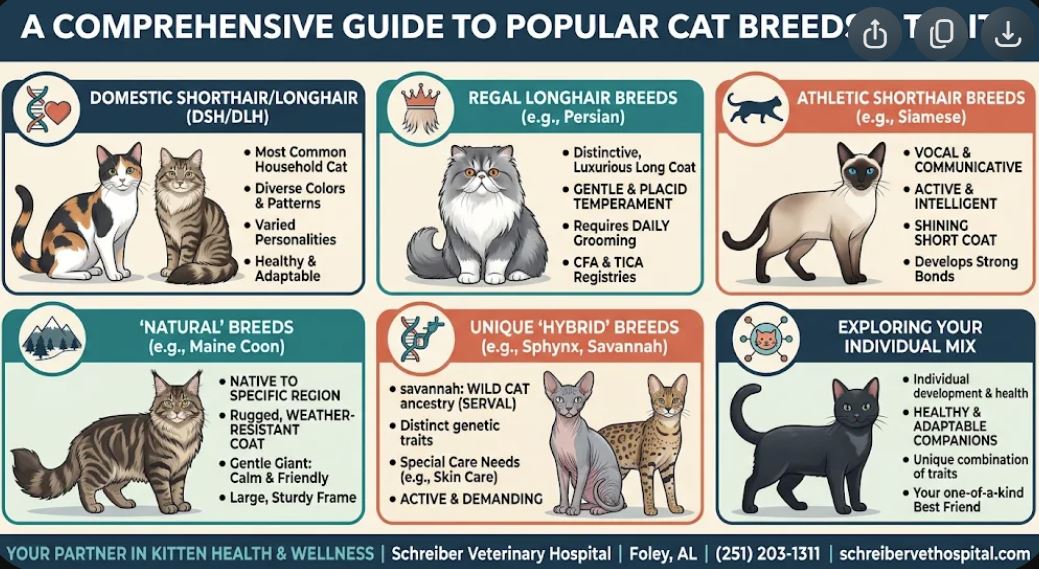
Before bringing a kitten home, it helps to consider how different feline traits match your household. While domestic shorthairs and longhairs make up the vast majority of beloved family companions, pedigree and specialized breeds offer specific physical profiles, energy levels, and grooming needs. Whether you prefer a calm, quiet companion or a vocal, high-energy playmate, evaluating coat care, activity expectations, and temperament ensures a seamless transition for your family.

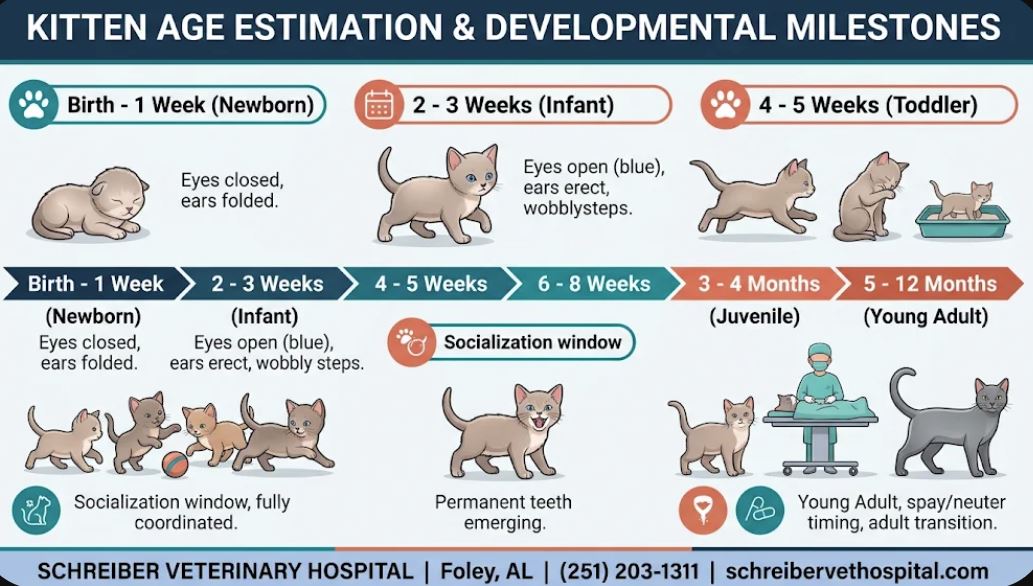
When bringing a new kitten home or taking in a stray, one of the first questions you will ask is "How old are they?" Determining a kitten’s age is far more than a fun milestone—it is critical information for safeguarding their health, development, and wellbeing.
A kitten's age dictates their exact nutritional needs (such as formula vs. wet food), regulates when vital core vaccinations can safely begin, sets the schedule for deworming and preventive care, and identifies critical socialization windows that shape adult feline temperament.
By observing key physical traits—such as eye openness, tooth development, ear posture, and physical coordination—you and your veterinarian can accurately pinpoint their developmental stage.
| Age Range | Physical Indicators | Typical Behaviors |
|---|---|---|
| 0-1 Week | Eyes closed, ears folded, umbilical cord attached. | Completely dependent, crawls for warmth. |
| 1-2 Weeks | Eyes opening (often blue), ears slightly unfolded. | Focuses on moving toward sounds. |
| 2-3 Weeks | Wobbly walking, true eye color may start. Ears slowly start to unfold and stand up. | Attempts to stand and take first steps. |
| 3-4 Weeks | Eyes transition improves, wobbly walking becomes steadier. Incisors emerge. | Begins playing, grooming, exploring, and pouncing. Shows interest in a litter box. |
| 5-6 Weeks | Fully coordinated movement. Eyes transition closer to final color. Deciduous (baby) teeth erupting fully. | Completely weaned from mother. Confidently uses litter box, exhibits high energy and playfulness. |
| 7-8 Weeks | All baby teeth present. True eye color often set. Coordinated, independent movement. | Fully independent. Ready for first round of vaccinations and initial wellness exam. |
| 2-4 Months | Smaller deciduous incisors replaced by permanent adult incisors. True eye color set. Rapid growth phase. | Incredibly curious, high energy. Optimal socialization window. Playful and adventurous. |
| 4-6 Months | Permanent adult molars emerge. Approaching sexual and physical maturity. Full set of adult teeth complete. | Increased focus and physical ability. Time to discuss spaying or neutering. Transition toward adolescent behaviors. |



Practical Steps for Daily Success → Incorporate short, positive handling sessions where you gently touch paws, ears, and mouths, immediately rewarding cooperation with high-value treats. Introduce everyday household noises gradually, such as playing vacuum sounds softly at a distance or ringing the doorbell while offering play.
To encourage proper feline behavior, always use interactive toys like feather wands rather than your bare hands during play sessions so your kitten learns that human hands are for comforting, not hunting. If introducing other pets in your home, keep interactions strictly supervised and slow, ensuring your new kitten is fully examined and vaccinated by Dr. Schreiber first.

Kittens tend to be independent yet affectionate, playful in short bursts, and often require a slightly lower daily time commitment than puppies once early socialization is underway. Early care involves frequent small meals, litter training, gentle handling, and early veterinary visits for core vaccines and parasite prevention.

Partnering with a veterinarian who knows your pet's species and life stage is the best first step. We can't wait to meet your new family member!
Call (251) 203-1311 or Visit Online