Practical Enrichment Ideas and When to Seek Veterinary Help
Learn practical ways to manage pet anxiety, noise sensitivity, and separation issues with enrichment ideas. Discover when anxiety becomes a medical concern and how Schreiber Veterinary Hospital in Foley, Alabama can help.
Pet anxiety is more common than many owners realize. Noise sensitivity to storms or fireworks, separation issues when left alone, and stress during clinic visits continue to rise. These behaviors affect quality of life for both pets and their families. At Schreiber Veterinary Hospital in Foley, Alabama, we emphasize preventive care and client education so pets can live longer, healthier lives. This guide shares practical enrichment ideas you can try at home, clear guidance on when anxiety becomes a medical issue that needs veterinary input, information on vet-prescribed anxiety medication, and two hypothetical case examples.
Ideas to Reduce Anxiety
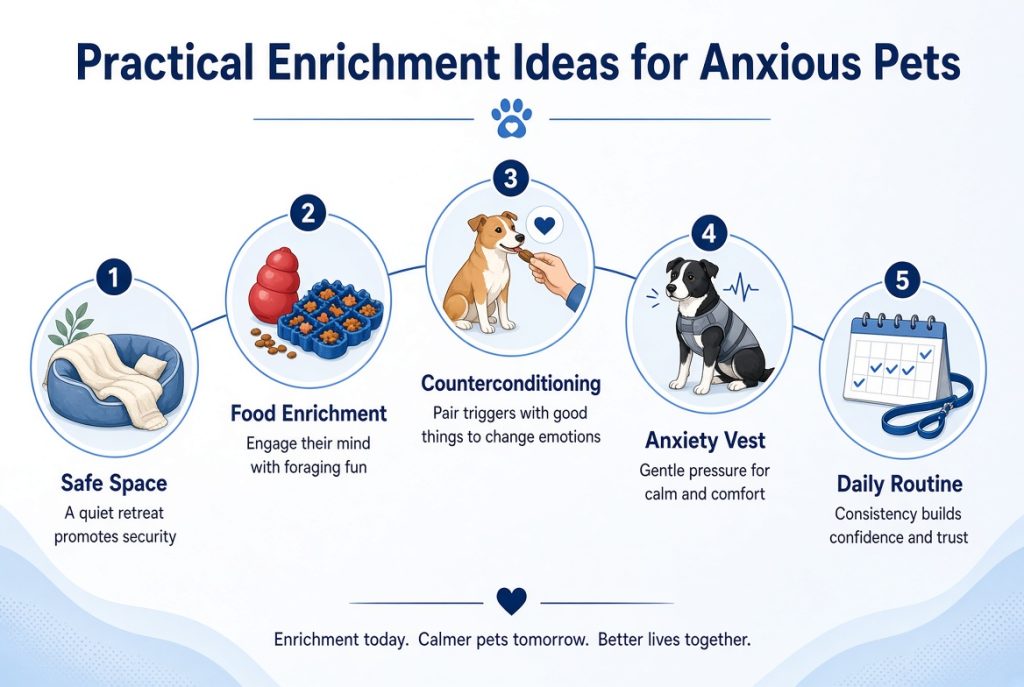
Enrichment gives pets appropriate outlets for mental and physical energy, which can lower overall stress. Focus on activities your pet already enjoys and introduce new ones gradually.
Create a safe space
Designate a quiet, interior area (bedroom, closet, or covered crate if your pet likes it) with familiar bedding, a worn T-shirt with your scent, and limited windows. Close curtains, add white noise or calming music, and keep lights on during noisy events. Introduce the space positively outside of stressful times.
Use food-based enrichment
Long-lasting items occupy the mind and create positive associations:
→ Frozen Kongs or similar toys stuffed with wet food, plain yogurt (if tolerated), or pumpkin.
→ Lick mats spread with soft food or peanut butter (xylitol-free).
→ Snuffle mats or scatter feeding for scent work.
→ Puzzle feeders that require problem-solving.
Offer these during predicted stressors (before you leave or when storms approach) so the pet associates the event with something rewarding.
Try counterconditioning and gradual exposure
Pair low-level versions of a trigger with high-value treats or play. For noise sensitivity, play recordings of storms or fireworks at a volume so low your pet stays relaxed, then reward calm behavior and slowly increase volume over many sessions. For separation issues, practice very short departures (seconds at first) while the pet is occupied with a special toy, returning calmly before anxiety rises. Consistency matters more than intensity.
Consider anxiety vests or wraps
Compression garments (such as those that apply gentle, steady pressure around the torso) help some dogs during noise events, travel, or mild situational stress by providing a swaddling-like sensation. Introduce them during calm times first so the vest itself is not scary. Evidence is modest and results vary by individual. Many owners report partial improvement for noise phobias, but severe daily or separation anxiety usually needs more than a vest alone. Check with your veterinarian before use, especially for senior pets or those with medical conditions.
Support overall routine
Regular exercise, predictable schedules, and short positive training sessions (using rewards) build confidence. Avoid punishment-based methods, which can increase fear.
These strategies work best as part of a broader plan. Many mild cases improve with consistent environmental management and enrichment.
When Medication May Be Recommended
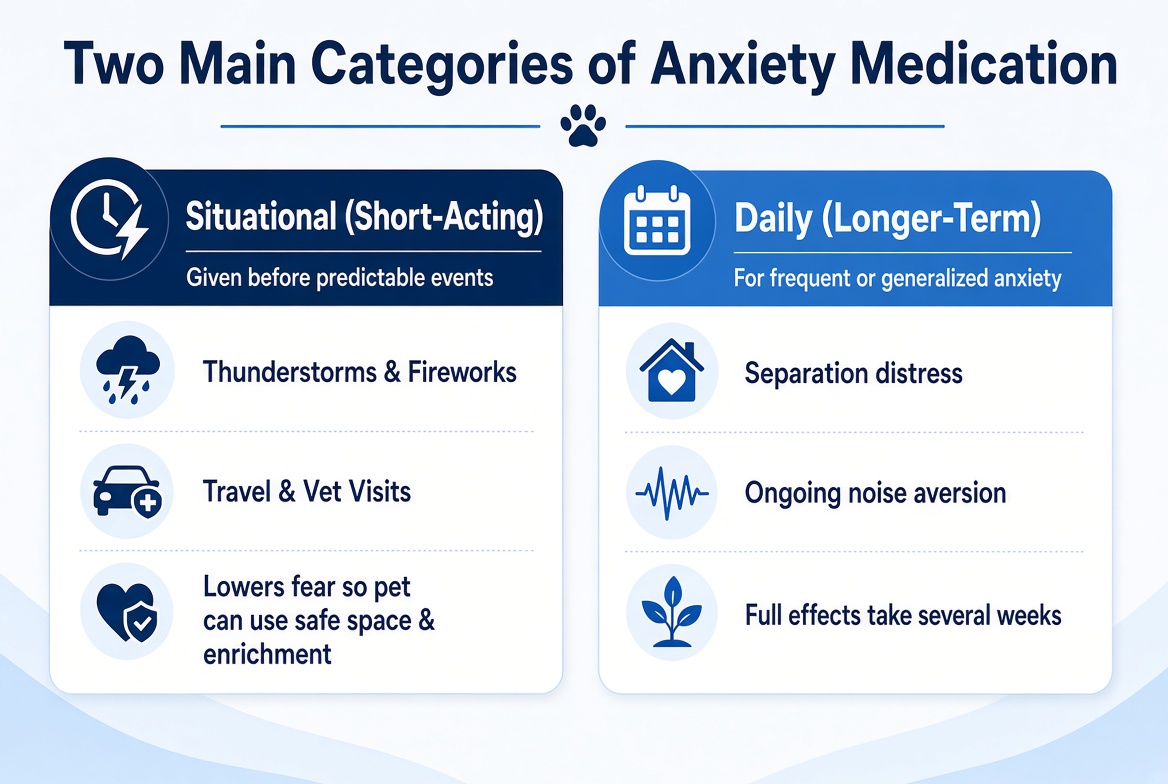
When enrichment, environmental management, and behavioral strategies alone do not sufficiently reduce distress, or when anxiety is intense enough to interfere with learning and quality of life, a veterinarian may recommend medication as part of a multimodal plan.
Dogs respond differently to the same triggers. The two examples below show how the level of distress can change what kind of support is helpful.
Case 1: Mild Thunderstorm Sensitivity (click to expand)
Max becomes mildly nervous during thunderstorms. He paces a little and looks for his owners, but he will settle within a few minutes when given a safe indoor space, white noise, and a frozen enrichment toy. He continues to accept treats and is able to rest once the storm passes. In Max’s case, consistent management and enrichment alone are usually enough to keep his distress low.
Case 2: Intense Storm and Separation Distress (click to expand)
Bella experiences intense panic during thunderstorms and also becomes highly distressed when left alone. She paces for hours, refuses food, tries to escape, and cannot calm down even with a safe space, white noise, and enrichment toys. Her owners tried gradual practice departures and calming tools, but her fear stayed too high for those strategies to work well.
After a veterinary exam ruled out medical causes, a plan was created that continued the enrichment and training and added appropriate medication. With the intensity of her fear reduced, Bella could finally use her safe space and begin to recover more quickly after storms and alone time.
The first dog often improves with consistent management and enrichment alone. The second dog may benefit from a veterinary evaluation that includes the option of medication. Medication is not used to replace training or environmental changes. It is used to lower the intensity of fear so the dog can actually use the safe space, accept rewards, and begin to feel safer over time.
Key Takeaway
Every pet is different. A thorough exam helps determine whether medical factors are contributing and whether medication should be part of the plan for that individual animal. Early veterinary input often leads to faster improvement and better long-term results.
Important Guidelines
Medication is never a first or standalone step. The process always begins with a thorough consultation so we can understand your pet’s full history, observe their behavior, and rule out medical contributors such as pain, illness, or endocrine issues.
A consultation with Dr. Schreiber is the recommended first step for any pet showing signs of anxiety. During this visit we discuss what you are seeing at home, perform a complete physical exam, and determine whether additional diagnostics are needed. Only after this evaluation can we decide whether medication should be part of the plan.
If medication is appropriate, only a licensed veterinarian can prescribe it, choose the right type and dose for your individual pet, and monitor response and any side effects. We work with you to create a clear, step-by-step plan that combines any recommended medication with enrichment, environmental changes, and behavior strategies.
Starting with a consultation ensures your pet receives the safest and most effective support from the beginning and helps us tailor every part of the plan to that individual animal.
How Medication Supports the Full Plan
Recent options include FDA-approved treatments specifically for noise aversion and/or separation anxiety in dogs. Other medications commonly used in veterinary behavior medicine may also be considered based on the individual case. Medications work best when combined with management, enrichment, and behavior modification. They reduce the emotional intensity enough for the pet to learn new, calmer responses. Plans are individualized, monitored, and adjusted as needed. Never give human medications or unprescribed products.
Our pharmacy at Schreiber Veterinary Hospital can fill appropriate prescriptions once a veterinarian has evaluated your pet and recommended a plan.
Schedule a Consultation Call (251) 203-1311Ready to help your pet feel calmer? Start with a consultation today.